AI Image Marketplace: Why Prompt Marketplaces Win
An AI image marketplace does not compete with image generation. It solves the harder problem around it: helping people recognize the style, prompt, moodboard, or finished visual outcome they want before they can ask for it.
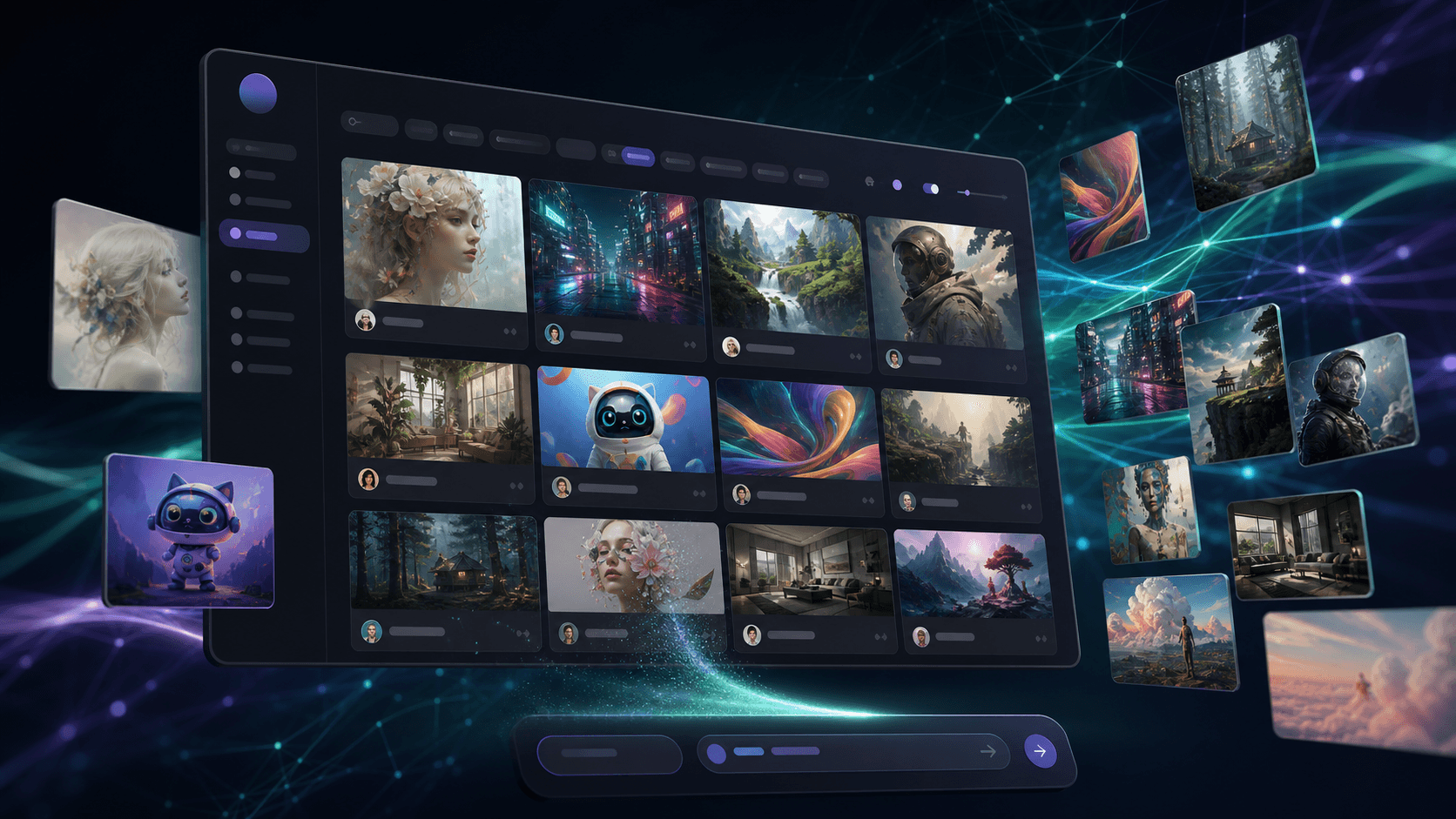
Why the AI image marketplace is growing
If the obvious prediction were right, the AI prompt marketplace should be shrinking as models get better at understanding plain instructions. Instead, public market research continues to project strong growth for prompt marketplaces and AI image generation platforms. Grand View Research estimates the AI prompt marketplace at $1.406 billion in 2024, with a projected $10.992 billion market by 2033. SkyQuest projects the AI image generator market growing from $3.16 billion in 2025 to $30.02 billion by 2033.
This should not make sense at first glance. Many of the models these prompts are written for are accessible to the same buyer. Nothing stops someone from typing their own request into Midjourney or another image model instead of buying a tested prompt or browsing a finished style. And yet marketplaces keep growing because buyers are not only paying for words. They are paying for proof that someone else has already solved the specification problem.
The AI headshot niche tells the same story at a narrower scale. Industry estimates vary, but recent public analyses place the 2025 AI portrait and headshot market in the hundreds of millions of dollars, with continued growth projected. If generation quality were the only variable, this sub-market should have flattened as soon as AI headshots became good enough. It has not, because the value is not just generation. The value is helping a user choose the right look.
The bottleneck was never generation. It is specification.
Here is the actual mechanism: most people do not know what they want until they see it. That is a known psychological problem wearing an AI costume.
Sheena Iyengar and Mark Lepper's famous 2000 choice study found that a booth with more jam flavors attracted more browsers, while the smaller selection converted better. Later research challenged a simple universal interpretation of choice overload, including a 2010 meta-analysis that found the average effect closer to zero and highly dependent on context. So the lesson is not that fewer options always win.
The deeper point is more useful for AI products: choice and specification are not the same skill. Ask someone to describe the exact headshot they want: the lighting, the smile, the background, the cultural signals, the approachable-but-credible feeling. Most people freeze because they have never had to turn that mental image into precise language. They know it when they see it. They cannot describe it before they see it.
A model that generates exactly what you type is only useful to the extent you can type the right thing. Generation solved the question, can a machine paint this? It did not solve the question, do I know what I want?
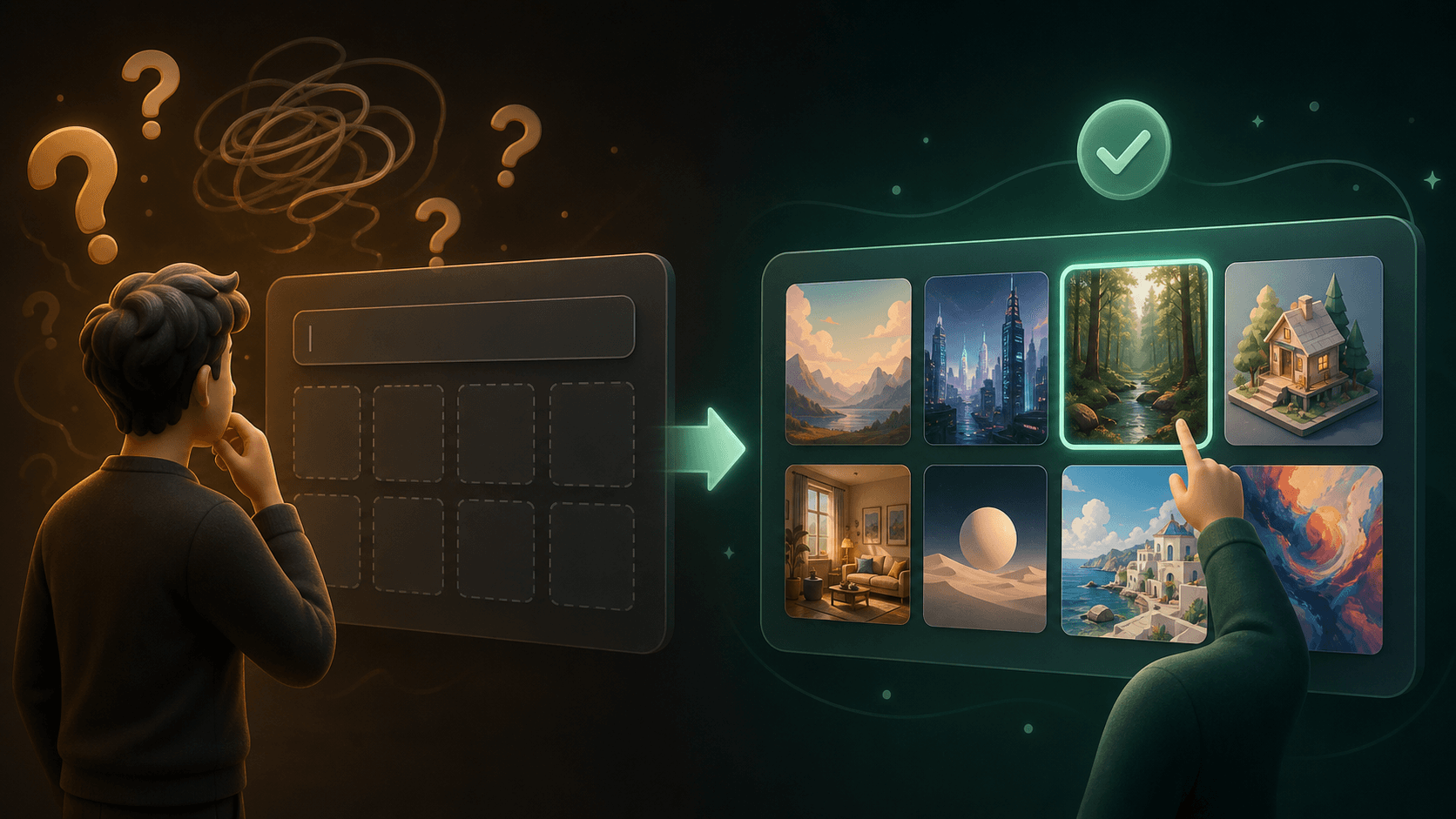
The product evidence is already public
You can watch this play out inside AI image tools themselves. The products with the strongest generation engines still invest heavily in feeds, galleries, style references, moodboards, and examples. That is not a side feature. It is the interface layer where users learn what they want.
AI headshot tools follow the same pattern. Users rarely begin with a perfect written prompt. They start by looking at finished examples and pointing: that lighting, that outfit, that mood, that level of polish. The generation step happens after the human has already made a visual decision.
PhotoReady, an India-focused AI style marketplace, builds around this insight instead of treating it as an afterthought. Creators publish finished styles for LinkedIn headshots, wedding portraits, dating-app photos, festival portraits, temple portraits, and reel thumbnails. Users browse finished outcomes, pick one, upload their photo, and generate their version of a look they already understand.
That is not a generation tool with a gallery attached. The gallery is the product. Generation is the fulfillment step after recognition has already happened.
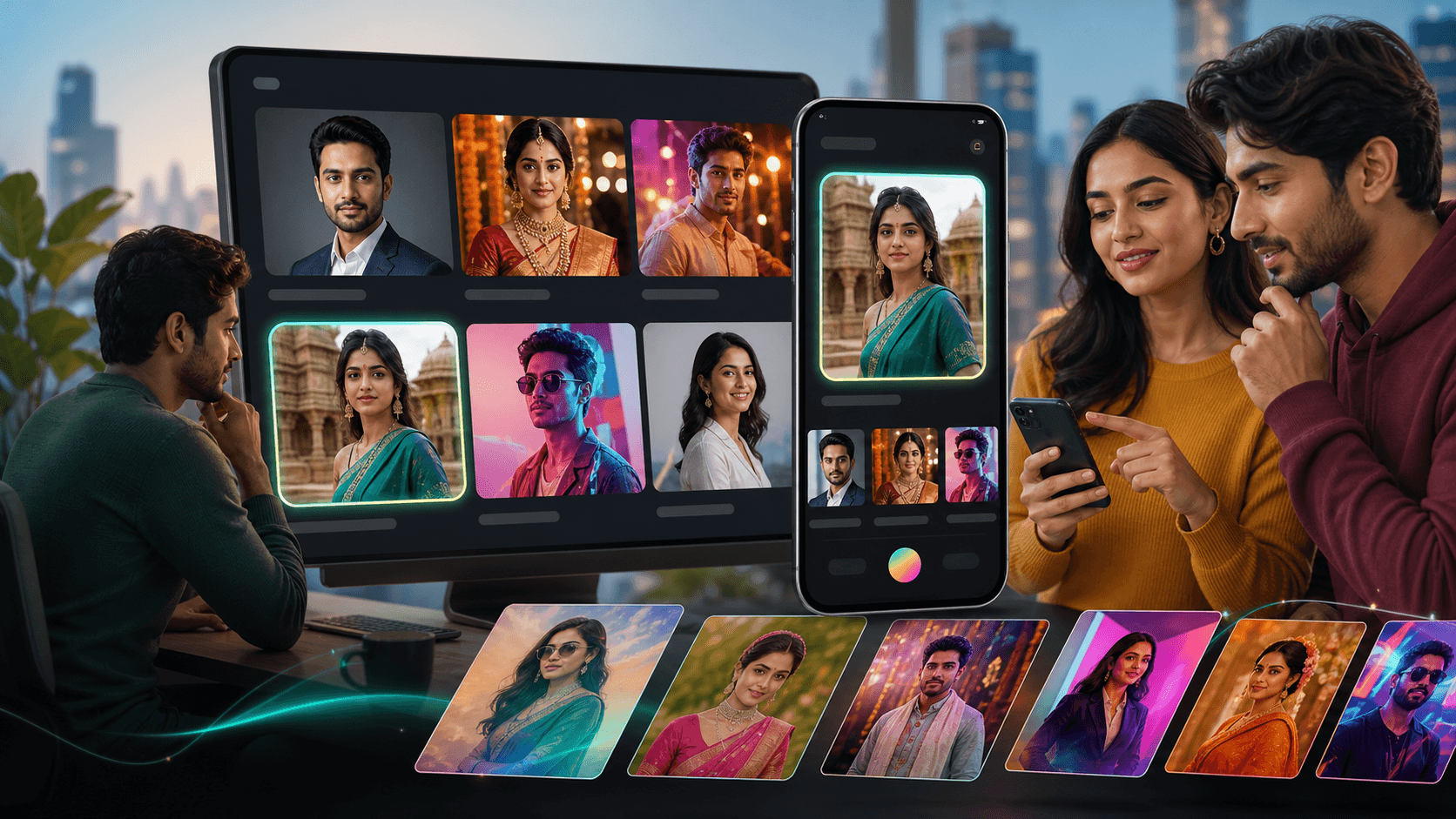
Where the value actually accumulates
This is the same pattern the rest of the AI stack is showing, just visible faster in images because the feedback loop is instant. The model commoditizes. The product layer around the model does not.
Prompt marketplaces are not only selling text strings. They are selling tested outcomes, previews, social proof, and reduced uncertainty. Pinterest understood this long before generative AI existed: people go there to recognize, not to describe.
The naive read on AI image generation is that better models mean less need for places to browse and compare. The stronger read is the inverse: better, cheaper, more abundant generation creates an ocean of options that most users cannot specify their way through alone. That makes the marketplace more valuable, not less.
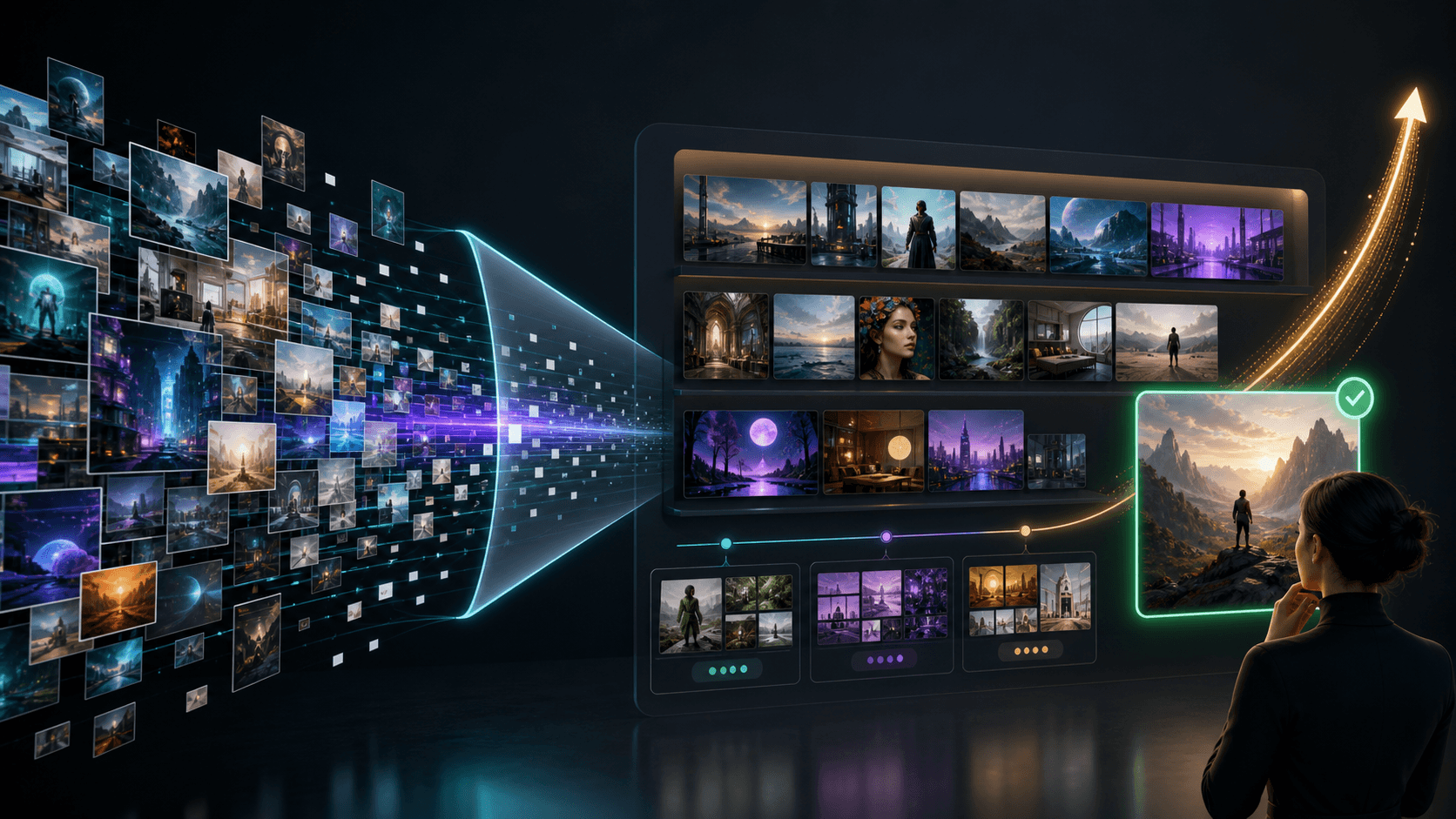
The prediction
The winners in AI image generation over the next three years will not only be the labs with the sharpest models. Image quality is converging fast enough that it becomes harder to defend as the only differentiator.
The winners will be the teams that own the layer where people recognize what they want before they generate it: the gallery, the feed, the marketplace, the moodboard, the style library. That layer does not have to be global to win. It can be built around a specific market's visual vocabulary: Indian wedding portraits, festival looks, LinkedIn headshots styled for local professional norms, or creator thumbnails shaped by regional aesthetics.
Prompting was never the only skill that mattered. Recognizing is. And recognizing is a problem a marketplace can solve better than a blank prompt box.
Related KaamKarDo tool
AI Headshots and Indian Style Photo Generator
Continue from this guide into the specialist product built for this exact search intent.
Explore PhotoReady stylesRelated reading
Frequently asked questions
What is an AI image marketplace?
An AI image marketplace is a platform where users browse finished image styles, prompts, templates, or creator-made visual workflows before generating or buying images.
Will AI replace stock photo marketplaces?
AI will reduce demand for generic stock photos, but it increases demand for curated galleries, style libraries, and marketplaces that help people choose what to generate.
What is an AI prompt marketplace?
An AI prompt marketplace sells tested prompts or visual recipes that produce specific outcomes in AI tools, reducing the need for users to write prompts from scratch.
Why does PhotoReady use a style marketplace model?
PhotoReady lets Indian users pick from finished looks such as LinkedIn headshots, wedding portraits, and creator photos, then generate their own version without writing prompts.
How do AI image marketplaces help SEO and branding?
They create searchable style pages, image-led content, internal links, and brand vocabulary that can rank for long-tail searches around AI photos, prompts, and professional visuals.